
Key takeaways
- Stop affected work and confirm whether the order is full, partial, or tied to specific conditions.
- Correct the field condition and the permit or inspection record that caused the order.
- Work does not resume merely because repairs are complete; DOB must formally rescind the order.
A stop work order posted on your building is not a warning. It is an enforcement action — and every day it stays posted, the fines accumulate and your project sits idle.
If the SWO involves plumbing or gas work, the path to lifting it runs directly through a Licensed Master Plumber. Here is what that process looks like and why it matters to move quickly.
What Is a Stop Work Order in NYC?
The New York City Department of Buildings issues stop work orders when work is being performed that violates the Building Code, is being done without a permit, exceeds the scope of an issued permit, or presents an immediate safety hazard. For plumbing, the most common triggers are:
Unpermitted work discovered during an inspection. A tenant complains, a neighbor calls 311, or a DOB inspector conducting a routine sweep notices that rough-in work has been opened up without an active permit on file. The work stops immediately.
Work that exceeds the issued permit. A permit was filed for a water heater replacement. The plumber also moved a gas line and added a fixture. The scope of the actual work doesn't match the filed permit — that's a violation.
Work performed by an unlicensed individual. In New York City, gas work, sewer connections, and most in-wall plumbing must be performed by or under the direct supervision of a Licensed Master Plumber. Work done by an unlicensed contractor is grounds for an immediate SWO, and the building owner bears the liability.
A failed inspection triggering re-inspection requirements. An inspection was conducted and the work failed. Until corrective action is taken and the work passes re-inspection, no further progress is allowed.
What Happens If You Ignore a Stop Work Order?
Ignoring a stop-work order can create additional enforcement and project risk. The controlling facts are the order type, cited conditions, any accompanying summonses, and whether DOB later observes work continuing contrary to the order. Use DOB’s current stop-work-order guidance and the property record rather than assuming a standard penalty.
Beyond the financial penalties: if the work involves gas or the building's heating system, an unresolved SWO can prevent occupancy, block a certificate of occupancy, and in multifamily buildings, expose the owner to HPD enforcement for failure to maintain heat and essential services.
The practical cost is also compounding. Contractors who stop work mid-project may not be available to return on short notice. Materials sit exposed. Inspection scheduling has lead times. Every week of delay is a week that could have been used to move through the correction process.
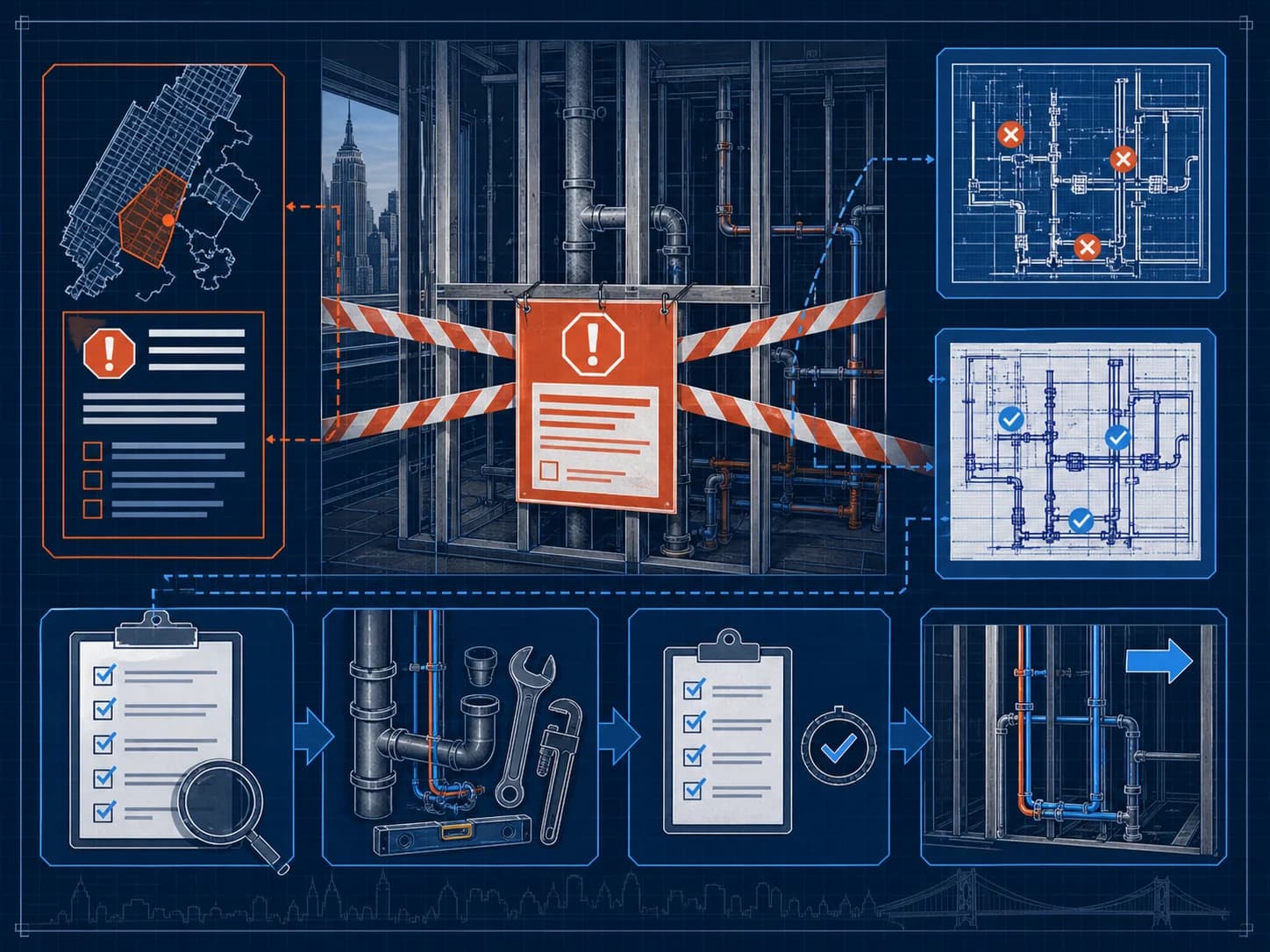
What It Takes to Lift a Stop Work Order for Plumbing Work
The DOB will not lift a plumbing stop work order by phone call or letter alone. There is a specific correction process, and it requires a Licensed Master Plumber as the plumber of record on the filing.
- Assess the triggering condition. Before anything is filed, a Licensed Master Plumber needs to inspect the work that generated the SWO and determine what was done, what was permitted (if anything), and what the gap is between the two. This assessment drives everything that follows.
- File corrective permits. If the work was unpermitted, a permit needs to be filed covering the actual scope of work — including any work that's already been completed. In some cases, this requires an after-the-fact (ATF) permit, which documents work that was done before a permit was obtained. The LMP submits the application through DOB NOW and becomes the plumber of record on the project.
- Perform corrective work if required. If the inspection identified deficiencies — improperly installed pipe, wrong materials, code violations in the existing work — those need to be corrected before the work can be re-inspected. This is field work, not just paperwork.
- Request re-inspection. Once corrective permits are filed and work is brought into compliance, the LMP requests a DOB inspection. The inspector reviews the work against the permit scope and the code. A passing inspection is what generates the sign-off that allows the SWO to be lifted.
- Close out the violation. If an ECB violation was issued alongside the SWO, that requires a separate resolution — either payment of the fine or a hearing appearance to contest it. The correction of the underlying work and the resolution of the ECB fine are related but distinct processes.
Why the Licensed Master Plumber Matters Here
Some parts of the NYC building code can be navigated by building owners directly, with the right paperwork and enough patience. Plumbing permit filings are not one of them. A Licensed Master Plumber (LMP) holds the state license that allows them to file permits, appear as the plumber of record in DOB records, pull gas work permits, and take legal responsibility for the work. Without an LMP on record, the DOB will not process the permit application.
This also matters because the LMP who files the corrective permit is the one who takes responsibility for the permitted plumbing work. Experience with stop work order corrections can reduce avoidable delays by keeping the permit scope, field corrections, and inspection request aligned. Inspection availability and DOB review timing, however, remain outside the plumber's control.
What controls the timeline?
There is no reliable universal timeframe. The duration depends on whether the order is full or partial, the accuracy of the corrective filing, physical scope, access, inspection availability, related OATH or permit records, and whether DOB accepts the rescission request. Track milestones instead of relying on a promised date.
Related next steps
- Review the broader DOB plumbing violation removal process.
- Use the after-the-fact permit guide when unpermitted work triggered the order.
- Use the Certificate of Correction guide when the field condition is corrected but the record remains open.
Common Questions
Can work continue after a plumbing stop-work order is issued?
Only work specifically permitted by DOB may proceed. Owners should read the order, secure the affected area, and confirm the authorized correction path before work resumes.
Does correcting the plumbing automatically lift the stop-work order?
No. DOB must accept the required filings and inspections and formally rescind the order. Physical correction alone does not change the public record.
Who handles plumbing permits for a stop-work-order correction?
When the correction requires a plumbing permit, a Licensed Master Plumber files and supervises the plumbing scope under NYC DOB requirements.